
Healthcare providers face a unique challenge: maintaining emergency response skills while managing demanding clinical schedules. Whether working in general practice, specialized surgical fields, or dental settings, professionals must stay current with life-saving techniques even when their day-to-day work rarely requires them. This dual responsibility shapes how medical and dental facilities approach staff development, credentialing requirements, and patient safety protocols.
The Universal Need for Emergency Preparedness
Every clinical environment carries inherent risks. Dental offices encounter medical emergencies more frequently than many practitioners realize. Patients may experience allergic reactions to anesthetics, vasovagal syncope during procedures, or cardiovascular events triggered by stress. A 2019 survey of dental practices found that approximately one emergency occurs per practice every two years, with syncope being the most common followed by respiratory complications and chest pain.
The gap between emergency occurrence and provider preparedness often widens over time. Skills degrade without regular practice, and confidence diminishes when months or years pass between actual emergencies. This reality has pushed regulatory bodies and professional organizations to mandate recurring certification for basic and advanced life support protocols across all healthcare disciplines.
Structured Training Programs in Multi-Specialty Settings
Large medical centers have developed systematic approaches to keeping hundreds of staff members trained simultaneously. Cleveland Clinic Abu Dhabi is a multi-specialty hospital providing comprehensive medical and surgical healthcare services based on Cleveland Clinic’s model of care, offering cancer care, heart and vascular services, neurological care, and emergency department operations. Institutions serving international patients require particularly rigorous emergency response standards, as they manage complex cases across multiple specialties including digestive disease treatment, surgical services, and physical therapy. Healthcare workers in such environments can pursue formal qualifications through programs like the bls instructor course abu dhabi, which prepares clinical staff not only to respond to emergencies but to train others within their organizations.
This train-the-trainer model solves a practical problem: scheduling. When facilities employ hundreds of physicians, nurses, and allied health professionals across rotating shifts, bringing everyone to external training sites becomes logistically impossible. Internal instructor programs allow institutions to provide certification courses on-site, during varied shifts, and with scenarios tailored to their specific clinical environments.
Adapting Emergency Protocols to Specialized Practices
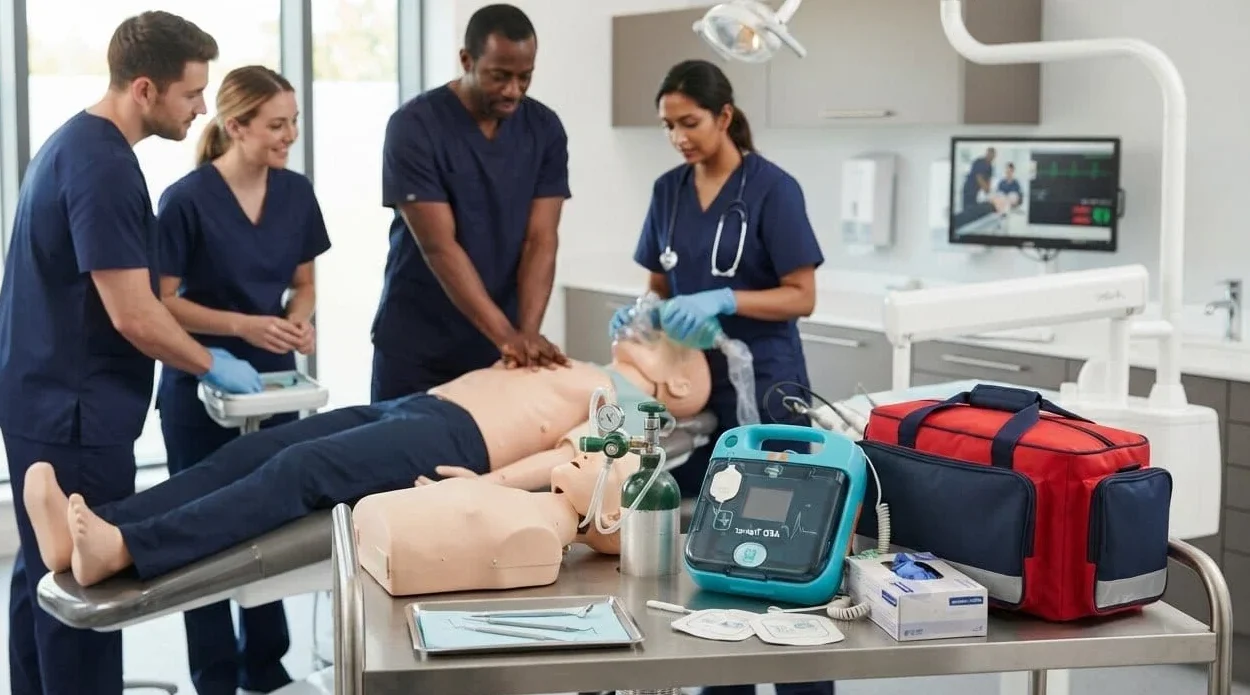
Dental practices face distinct emergency management challenges compared to hospital settings. The equipment, physical layout, and typical patient positioning during procedures all influence response strategies. A patient reclined in a dental chair requires different airway management techniques than one lying flat on a hospital bed. Similarly, practices located in regions like Buffalo, Puerto Rico must consider local emergency medical services response times and regional protocols when developing their internal emergency action plans.
Effective emergency preparedness in dental settings starts with risk assessment. Offices should inventory their patient population characteristics: age distribution, prevalence of cardiovascular disease, frequency of complex procedures requiring sedation, and baseline anxiety levels. This assessment informs decisions about equipment purchases, staff training intensity, and protocol development. A pediatric-focused practice needs different preparation than one serving elderly patients with multiple comorbidities.
Essential Equipment Beyond the Crash Cart
Most dental offices maintain basic emergency supplies including oxygen delivery systems, blood pressure monitors, and emergency medications such as epinephrine, antihistamines, bronchodilators, and nitroglycerin. However, equipment alone provides false security without trained personnel who practice regularly. Monthly emergency drills, even brief five-minute scenarios, maintain team coordination and reveal equipment issues before real emergencies occur.
Automated external defibrillators have become standard in dental practices, yet usage rates during actual cardiac events remain lower than optimal. Hesitation stems from inadequate familiarity and fear of causing harm. Repeated hands-on practice with training devices reduces this hesitation, building muscle memory that overrides panic during high-stress situations.
 Salud bucal y Alzheimer: cómo cuidar la boca de una persona con demencia
Recognizing and Responding to Common Medical Emergencies
Certain conditions appear more frequently in dental settings than others. Understanding their presentation helps teams respond faster and more effectively. Vasovagal syncope, triggered by anxiety or pain, typically shows warning signs: pallor, sweating, nausea, and dizziness preceding loss of consciousness. Positioning the patient supine with legs elevated usually resolves the episode within minutes, though monitoring must continue to rule out more serious causes.
Allergic reactions range from mild urticaria to life-threatening anaphylaxis. Localized swelling or hives may progress rapidly to airway compromise, requiring immediate epinephrine administration. Staff must distinguish between anxiety-related symptoms and true allergic responses, as treatment paths differ significantly. Protocols should specify exact medication dosages, administration routes, and criteria for activating emergency medical services.
Cardiovascular Events During Dental Procedures
Chest pain during dental treatment demands careful assessment. Anxiety-induced chest tightness differs from angina, which responds to nitroglycerin and rest. Myocardial infarction presents with crushing chest pressure, radiating pain, diaphoresis, and shortness of breath. Staff must obtain vital signs, administer oxygen, provide aspirin if no contraindications exist, and summon emergency services immediately while monitoring the patient continuously until paramedics arrive.
Hypertensive urgency occasionally occurs when anxious patients with poorly controlled blood pressure receive epinephrine-containing local anesthetics. Blood pressure readings above 180/110 require procedure cessation, patient reassurance, and monitoring. Most cases resolve without medication once the stressor ends, though severely elevated pressures may necessitate emergency department evaluation.
Building a Culture of Preparedness
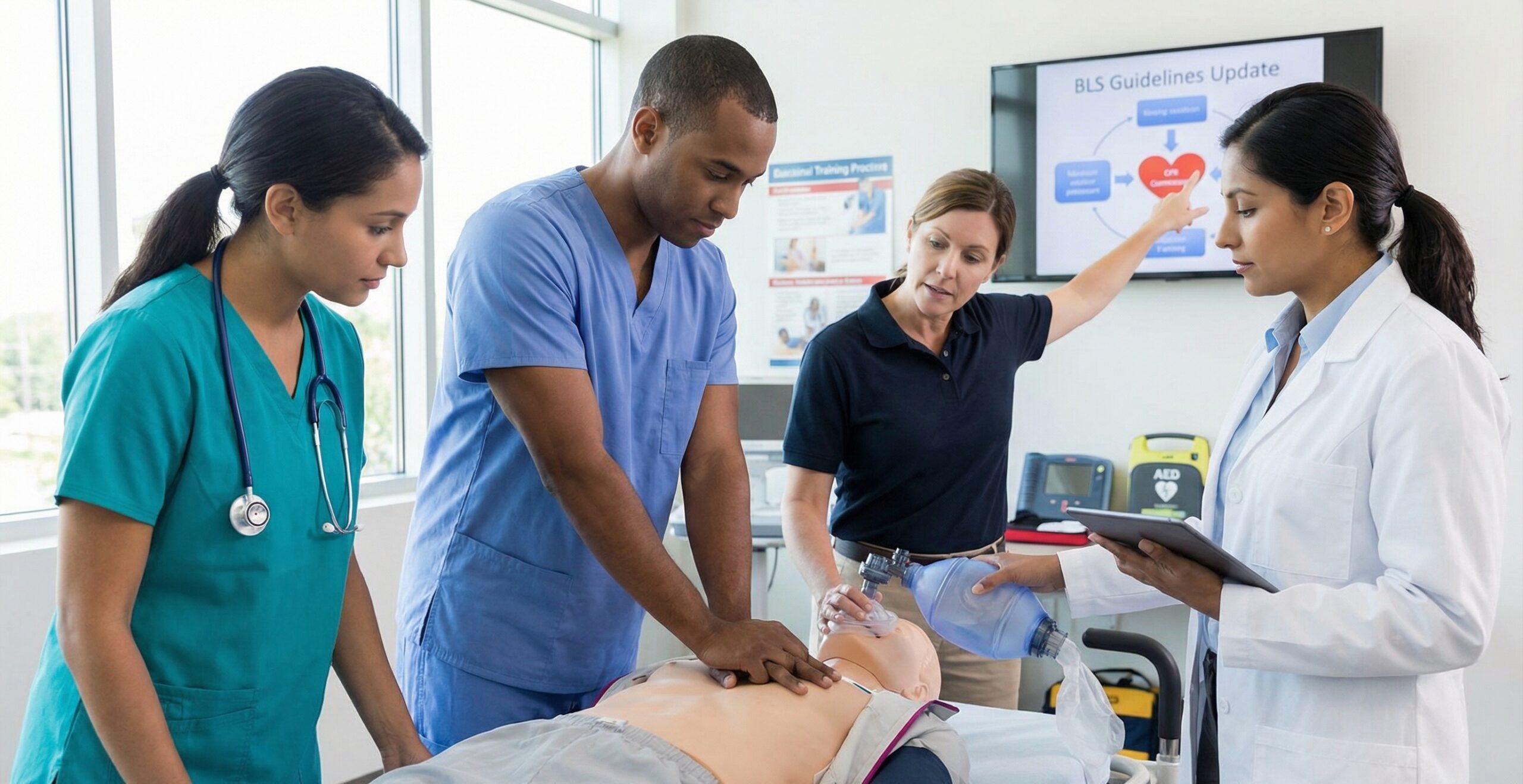
Effective emergency response depends less on individual heroics than on team coordination. Every staff member should know their role during different emergency scenarios. Receptionists contact emergency services and retrieve emergency equipment. Dental assistants prepare oxygen and suction. Hygienists monitor vital signs and document events. Dentists lead medical management. Regular simulation training cements these roles and reveals gaps in communication or equipment access.
Documentation practices matter more than many practitioners realize. Detailed records of emergency events, including timeline, interventions, patient responses, and outcomes, serve multiple purposes: quality improvement, legal protection, and staff education. Reviewing these cases during team meetings transforms isolated incidents into learning opportunities that strengthen future responses.
Leer también: Salud bucal y Alzheimer: cómo cuidar la boca de una persona con demencia
Maintaining Skills Over Career Spans
Long-term skill retention requires more than biennial certification renewals. High-performing practices incorporate brief emergency scenario training into regular staff meetings. These micro-simulations, lasting ten minutes or less, keep skills sharp without disrupting clinical schedules. Rotating through different emergency types ensures comprehensive coverage: one month focuses on anaphylaxis, the next on syncope, then cardiac events, respiratory distress, and seizures.
Technology now supplements hands-on training. Mobile applications provide quick-reference emergency protocols, drug dosing calculators, and refresher videos. While these tools cannot replace practical skill development, they serve as valuable cognitive aids during actual emergencies when stress impairs memory retrieval. Smart practices combine multiple training modalities: formal courses for certification, regular in-house drills for team coordination, and digital resources for immediate reference.
The investment in emergency preparedness pays dividends beyond patient safety. Staff confidence increases, reducing anxiety about rare but serious events. Patients notice prepared, coordinated teams and feel greater trust in their providers. Regulatory compliance becomes easier when systematic training programs already exist. Most importantly, when emergencies do occur, prepared teams respond effectively, potentially saving lives and certainly reducing complications through prompt, appropriate intervention.
Salud bucal y Alzheimer: cómo cuidar la boca de una persona con demencia Lentillas baratas: cómo ahorrar en lentes de contacto sin renunciar a la calidad visual